
 Faster C++ iterative builds with GitHub CopilotSlow builds are a consistent theme of feedback from C++ developers. We built GitHub Copilot build performance for Windows so you can leverage Copilot to optimize your project’s build times. This workflow will find optimizations that bring your build times down. At first, we only measured the impact of build optimizations on full clean builds. […] The post Faster C++ iterative builds with GitHub Copilot appeared first on C++ Team Blog .📝C++ Team Blog
Welcome to SwedenCpp
Latest blogs, videos, podcasts and releases in one stream
Friday, July 17, 2026
Faster C++ iterative builds with GitHub CopilotSlow builds are a consistent theme of feedback from C++ developers. We built GitHub Copilot build performance for Windows so you can leverage Copilot to optimize your project’s build times. This workflow will find optimizations that bring your build times down. At first, we only measured the impact of build optimizations on full clean builds. […] The post Faster C++ iterative builds with GitHub Copilot appeared first on C++ Team Blog .📝C++ Team Blog Why has the display control panel pointer truncation bug gone unfixed for so long?It's fixed, but the fix isn't getting there. The post Why has the display control panel pointer truncation bug gone unfixed for so long? appeared first on The Old New Thing .📝The Old New Thing
 The Morning Briefing - C++ Concurrency Before the Hardware Reckoning - Fedor Pikus - C++Now 2026🎥CppNow
 Analog Filters for Realtime Audio - George Gkountouras - ADC 2025🎥audiodevcon
 data parallelism with std.parallelism - Intro to Concurrency - Part 5 of N [Dlang Episode 152]🎥Mike Shah
If this page is useful, please consider donating a coffee
Thursday, July 16, 2026
 Pure Virtual C++ 2026 [Meet the Speakers, Part 3]: Modernizing C++Meet the speakers behind Pure Virtual C++ 2026. In the final part, Victor Ciura maps the real challenges and promising directions for C++/Rust interop. The post Pure Virtual C++ 2026 [Meet the Speakers, Part 3]: Modernizing C++ appeared first on C++ Team Blog .📝C++ Team Blog
 Using AI to build your own softwareA few years ago, a friend of mine was stuck. He needed to quickly process over a hundred high-quality images according to a complicated sequence. He was using Photoshop, but it was going to take him days. Initially, he asked for my help, could I do the manual labor? I spent 15 minutes writing a … Continue reading Using AI to build your own software📝Daniel Lemire's blog
 LIEVEN DE COCK - Better Threading in C++20🎥cppunderthesea
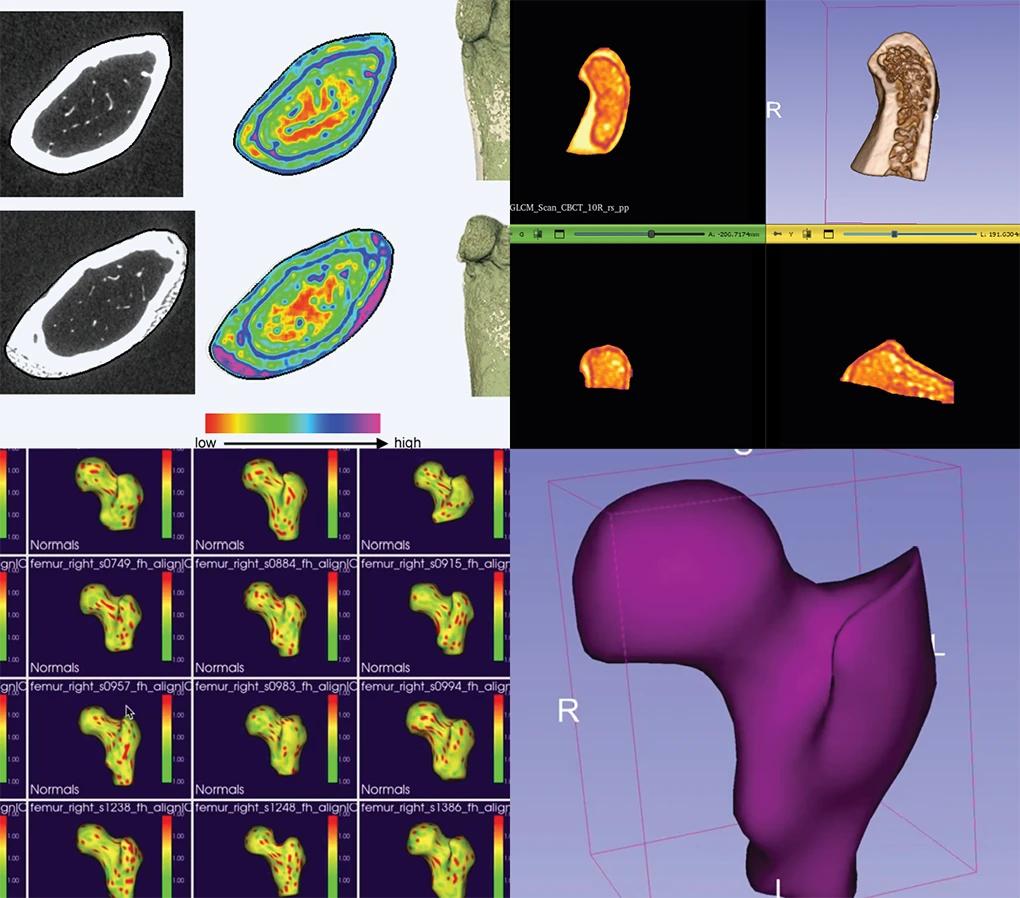 Building Software for the Next Generation of Bone ImagingBone imaging continues to evolve as new imaging modalities, quantitative biomarkers, and AI-assisted analysis expand what researchers can measure and understand. These advances are creating new opportunities across musculoskeletal research. They are also increasing the need for software that can support increasingly complex imaging studies. Software Challenges in Modern Bone Imaging Today’s bone imaging landscape […]📝Kitware Inc
 CLion 2026.2 Is HereWith a debugger skill for AI agents, debug profiles for simplified debugger configuration, and support for C++26 reflection. CLion 2026.2 is now available. This latest version of the JetBrains IDE for C and C++ includes the following key features: You can download CLion 2026.2 from the link below, via the Toolbox App, or as a […]📝CLion : A Cross-Platform IDE for C and C++ | The JetBrains Blog
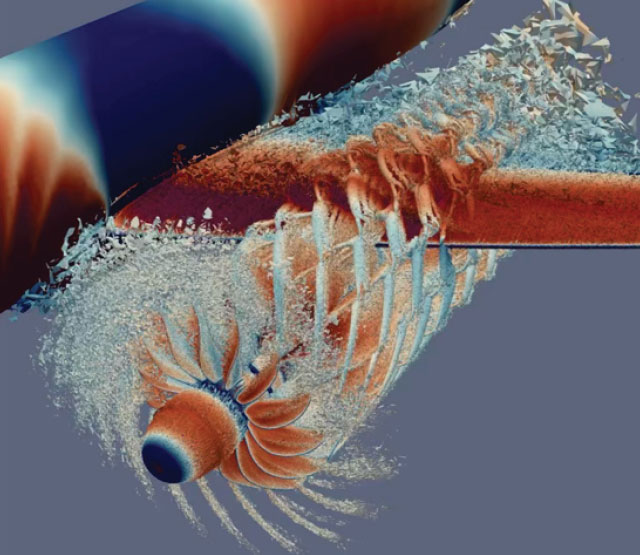 What’s New in In Situ Analysis and Visualization with ParaView CatalystAs HPC systems scale, the bottleneck is increasingly shifting from compute to data movement. While compute performance continues to improve, storage and interconnect bandwidth have not kept pace. As a result, moving data between devices and storage can become one of the largest performance constraints in modern simulation workflows. That gap is why in situ […]📝Kitware Inc
 Sanitize it Before You Ship IT - Threadsanitizer🎥CppOnlineSpeculating on how the buggy control panel extension truncated a value that it had right in front of itInferring the code's history. The post Speculating on how the buggy control panel extension truncated a value that it had right in front of it appeared first on The Old New Thing .📝The Old New Thing
 dynamic memory and memory management [C++ Shorts Lesson 21]🎥Mike Shah
 Egerton MS 1995Previously on this blog: “The Book of St Albans (1486)” (2026-05-22), in which I made a table of terms of venery, a.k.a. company terms, e.g. “an exaltation of larks,” as in the eponymous book by James Lipton. I mentioned that the Book of St Albans actually has “an exaltyng of larkis,” and that it’s only in Egerton MS 1995 (circa 1450), according to Lipton, that we find “an exaltacyon of larkys” proper. But I couldn’t find any digitized copy of Egerton MS 1995 to verify that claim.📝Arthur O’Dwyer
Wednesday, July 15, 2026
 MSVC Build Tools Preview updates – July 2026Try the latest updates to MSVC Build Tools Preview The post MSVC Build Tools Preview updates – July 2026 appeared first on C++ Team Blog .📝C++ Team Blog
 Announcing 3D Slicer 5.123D Slicer 5.12 is now available. This latest stable release includes updates to DICOM workflows, visualization, Python package management, Qt 6 build support, and the extension ecosystem. Slicer 5.12 serves as a stable release before the project continues broader work related to Qt 6 and native Apple Silicon support.📝Kitware Inc
 The case of the invalid function pointer when shutting down the display control panelWatching the bits disappear. The post The case of the invalid function pointer when shutting down the display control panel appeared first on The Old New Thing .📝The Old New Thing
 2026 Military Health System Research Symposium (MHSRS)Kitware is proud to return to the Military Health System Research Symposium (MHSRS), the premier scientific meeting dedicated to advancing research and technologies that support Warfighter health and medical readiness. We are exhibiting at Booth 624, where we will demonstrate our open source software for military medical applications.📝Kitware Inc
 C++ Insights - Episode 76: New, better, lambda visualization in C++ Insights🎥Andreas Fertig
 PSD to DAW - Building a Pixel-Perfect UI Pipeline - Bence Kovács - ADC 2025🎥audiodevcon
 C++ Insights Episode 76: New, better, lambda visualization in C++ InsightsI published a new C++ insights episode: New, better, lambda visualization in C++ Insights. In this episode, you'll share the latest change in C++ Insights regarding visualizing lambdas. Andreas📝AndreasFertig.com
 Reduce LLVM Build Artifact Storage Costs by 50% with Content-Defined ChunkingReduce LLVM Build Artifact Storage Costs by 50% with Content-Defined Chunking One of the classic strategies to speed up a system is to avoid redundant work. Scalable build systems like Bazel and Buck2 heavily employ this strategy in various ways, with remote caching and content-addressable storage being two prominent examples. While remote caching prevents repeating redundant build actions, content-addressable storage (CAS) exists for the purpose of data deduplication. However, traditionally CAS operates at the granularity of a single file. When you modify a single byte in a file and store it in a CAS, the CAS stores a second, complete file. Deduplication at the file level is quite palatable for smaller files; a single build invocation typically contains many thousands of small files. Who cares if we store a couple more? However, as file sizes increase, the cost of storing yet another slightly modified version of a file becomes more expensive. Instead of tossing a couple extra kilobytes into storage, you might be storing a few more gigabytes . Now, consider where these large files come from. These large files are often outputs of build actions, and those build actions depend on many smaller inputs. As those many inputs churn, the outputs also churn. Suddenly the cost of touching a tiny little source file isn’t just the cost of uploading a new version of the source file to CAS–it’s now also the cost of all the large outputs that are produced by the build. This dictates the growth rate of your CAS storage costs, which scales directly with the number of incoming builds. At AI-scale, these costs have become more important than ever before.📝EngFlow Blog
Tuesday, July 14, 2026
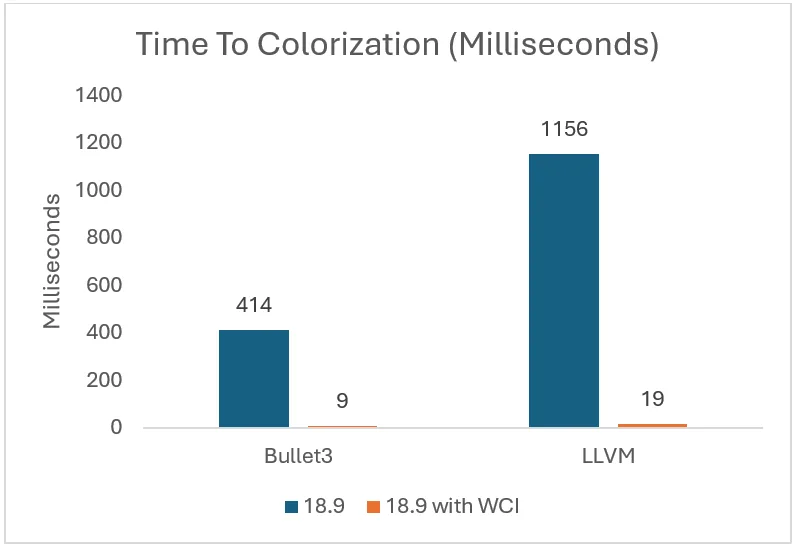 Rethinking C++ Performance: Faster Code Navigation and GitHub Copilot Tools with Whole Codebase IndexingIn large C++ codebases, your code understanding and navigation depend on quickly determining how symbols, declarations, definitions, and references are connected across your project. In Visual Studio Insiders 18.9, the new whole codebase indexing (WCI) enhances the existing browse database via a deeper, more comprehensive indexing approach. This preview feature allows Visual Studio to access […] The post Rethinking C++ Performance: Faster Code Navigation and GitHub Copilot Tools with Whole Codebase Indexing appeared first on C++ Team Blog .📝C++ Team Blog
 The Prompt-Wait-Evaluate Loop: How AI Kills Flow Without You NoticingA few months ago, I wrote about finding joy in programming in the age of AI. In the personal discussions I’ve had with fellow developers — both before and after that article — one thing keeps striking me. Most people don’t argue. They just say: yes, that’s exactly how it feels. But a question kept coming up in those conversations: why does it feel this way? Not in the philosophical sense — I c...📝Sandor Dargo's Blog
 CMake 4.4.0 available for downloadCMake 4.4.0 available for download📝Kitware Inc
 Joaquín M. López Muñoz: A Life in Code, and Why Boost Endures🎥C++ Alliance
 What is a local C++ User Group?🎥MeetingCpp
 July's C Vu Journal has been published.The July 2026 ACCU C Vu journal has been published and should arrive at members' addresses in the next few days. C Vu 38-3 and previous issues of C Vu can be accessed via the Journals menu (ACCU members only).📝ACCUMicrospeak: Double-click and drill downPlease, tell me more. The post Microspeak: Double-click and drill down appeared first on The Old New Thing .📝The Old New Thing
 Keynote: Benchmarking - It's About Time - Matt Godbolt - C++Now 2026🎥CppNow
 PVS-Studio with CMake projects🎥PVS-Studio
 OpenGL Multitexturing - Using 2 or more textures as data in glsl [Episode 43]🎥Mike Shah
Monday, July 13, 2026
Pure Virtual C++ 2026 [Meet the Speakers, Part 2]: The AI-Native C++ Developer WorkflowPure Virtual C++ 2026 streams Tuesday, July 21, 2026 at 9:00 AM PT, a free, one-day virtual conference for the whole C++ community, live on YouTube (Microsoft Reactor) and Twitch, with on-demand recordings on the Visual Studio YouTube channel afterward. Register now → Welcome to part two of our Meet the Speakers series. In part one we looked at building and running […] The post Pure Virtual C++ 2026 [Meet the Speakers, Part 2]: The AI-Native C++ Developer Workflow appeared first on C++ Team Blog .📝C++ Team Blog C++ Contracts - A Meaningfully Viable Product Part 2🎥CppOnlineWhy don’t we just make the entire stack out of guard pages?Guard pages all the way down? The post Why don’t we just make the entire stack out of guard pages? appeared first on The Old New Thing .📝The Old New Thing
 40 Years of C++ Programming and Embeddable Languages - Mark Guidarelli CppCast 409 / C++Weekly 541🎥Jason Turner
 Building Inclusive Audio Tools - Accessibility with ARIA, WCAG, and Real-World Projects - ADC 2025🎥audiodevcon
 CTAD and printing a vector [C++ Shorts Lesson 20]🎥Mike Shah
Sunday, July 12, 2026
 HMake: Caching And Correctness🎥GlobalCpp
 Keynote: Multidimensional Parallel Standard C++ - Mark Hoemmen - C++Now 2026🎥CppNow
 Real-Time Audio in Python: Introducing the asmu Package - Felix Huber - ADC 2025🎥audiodevcon
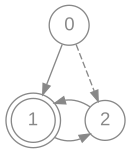 Irreducible loopsThe dominator tree lets us identify natural loops : a back edge T->H whose head H dominates its tail T defines a loop with the single entry H . This works only for reducible control flow graphs. Optimized machine code and decompiler output routinely contain irreducible loops, which have more than one entry and thus no dominating header, so the dominator-based method cannot see them. This post builds a loop-nesting forest for an arbitrary CFG with the single-pass depth-first search of 韦韬、毛剑、邹维、陈宇(Tao Wei, Jian Mao, Wei Zou & Yu Chen) A New Algorithm for Identifying Loops in Decompilation , SAS 2007 (The 14th International Static Analysis Symposium).📝MaskRay
 nullptr and pass by reference preference [C++ Shorts Lesson 19]🎥Mike Shah
Saturday, July 11, 2026
 X just gave us an interface that AI agents can use. I pointed it at my own posts.I have been on X for a long time. Like most people who post regularly, I have a gut feeling for what might interest people. I post in the morning. Longer posts seem to do better. But gut feelings are not measurements. And until recently, digging into your own posting data meant either clicking around … Continue reading X just gave us an interface that AI agents can use. I pointed it at my own posts.📝Daniel Lemire's blog
 My terrible PAL decoder running on a live SDR capture of my Sega Master System🎥Matt Godbolt
 After the Tutorial: Where to Continue your Graphics Programming Journey - Mike Shah GPC 2025🎥Mike Shah